EPA Expands Energy Labels for Ultrasonic Cleaners
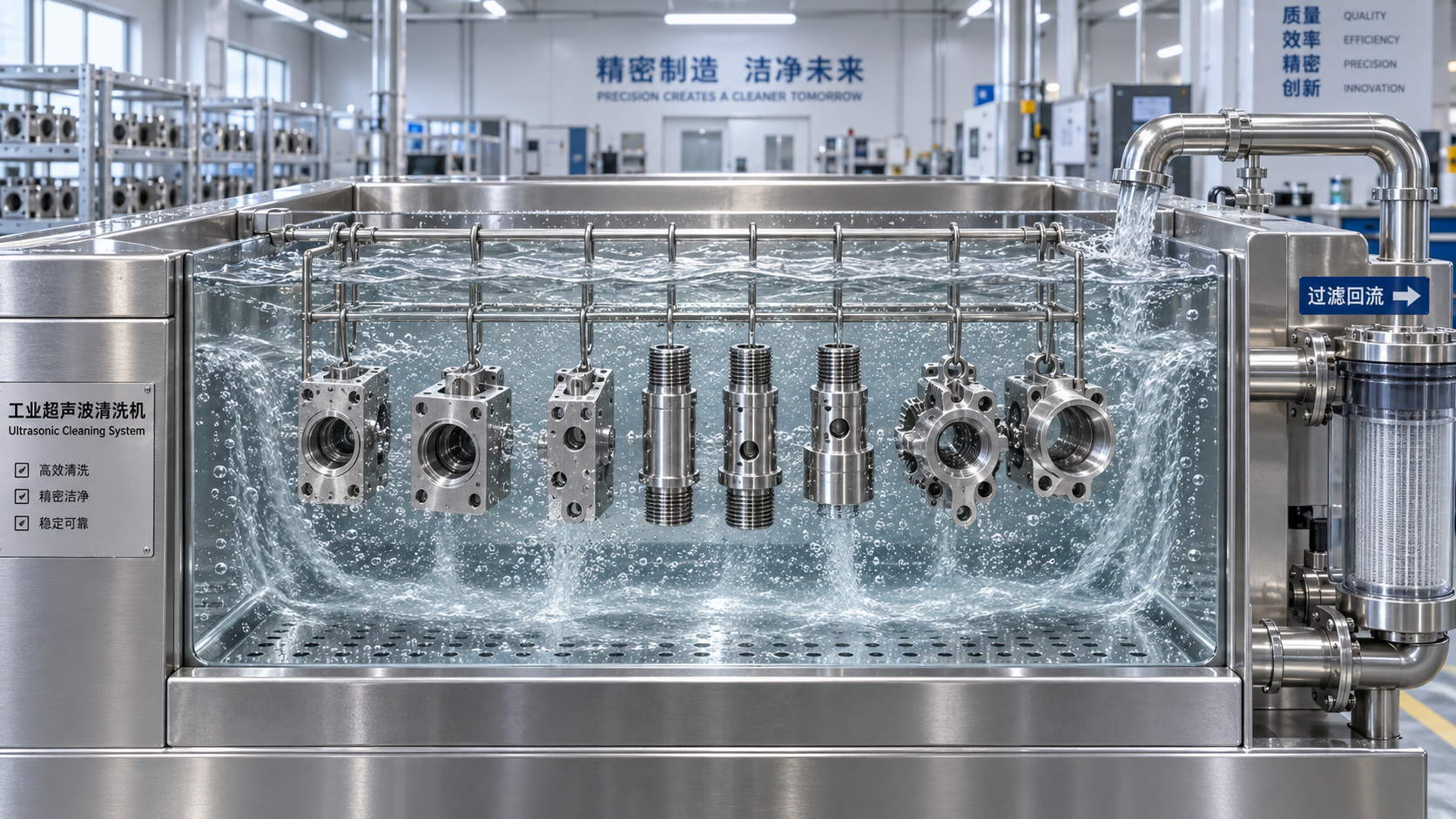
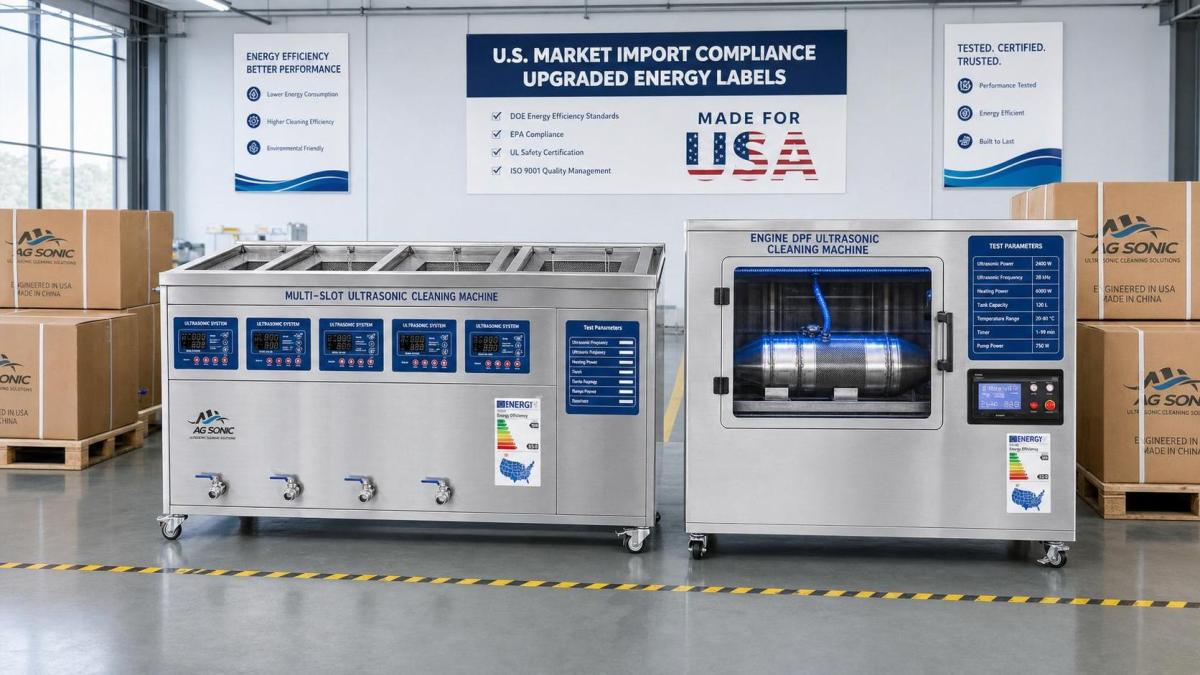
On June 26, 2026, the U.S. Environmental Protection Agency updated its Energy Star Program Requirements for Ultrasonic Cleaning Equipment, extending mandatory energy labeling to Engine DPF Ultrasonic Cleaners and Multi-tank Ultrasonic Cleaners. From October 2026, imported models in these categories must display tested values for tank volume ratio (L/kW·h) and cavitation density (W/cm²), with unlabeled products facing refusal of entry by CBP. For equipment manufacturers, importers, distributors, and buyers serving the U.S. market, this is worth close attention because the change directly links product labeling compliance to market access.
What the EPA update now requires
The confirmed change is that the EPA revised the Energy Star Program Requirements for Ultrasonic Cleaning Equipment on June 26, 2026. Under that update, Engine DPF Ultrasonic Cleaners and Multi-tank Ultrasonic Cleaners were added to the mandatory energy labeling system.
The stated implementation point is October 2026 for imported models. From that time, covered products must carry tested values for tank volume ratio, expressed as L/kW·h, and cavitation density, expressed as W/cm².
The enforcement consequence described in the provided information is clear: products without the required label will be denied entry by U.S. Customs and Border Protection.
Where the operational pressure is likely to appear
Manufacturers supplying the U.S. market
From an industry perspective, manufacturers are likely to feel the first impact because the new rule focuses on product-level labeling content tied to measured performance values. The practical pressure point is whether covered models are prepared with compliant labels before shipment. What deserves closer attention is the readiness of model-specific test results and the consistency between technical documentation and physical labeling.
Importers and direct trading companies
Importers and direct trading companies may face the most immediate transaction risk, because the provided information connects missing labels with refusal of entry by CBP. The business impact is therefore concentrated in customs clearance, shipment timing, and document control. For these parties, the key change to watch is whether all covered inbound models from October 2026 are presented with the required label and supporting product information.
Distributors and channel operators
Distributors and channel-side businesses may be affected through inventory planning and supplier coordination. Analysis shows that if upstream suppliers are not aligned on the new requirements, downstream channels could face disruptions in replenishment or uncertainty over which product variants remain import-ready for the U.S. market. Their attention should therefore stay on covered product categories and the compliance status of incoming stock.
Industrial buyers and service-oriented users
Buyers sourcing ultrasonic cleaning equipment for operational use, including those relying on DPF-related cleaning equipment or multi-tank systems, may not be the direct target of border enforcement, but they could still see procurement effects. Observably, their main concern is continuity of delivery and clarity over product specifications. The practical issue is whether suppliers can confirm compliant labeling and measured values in advance of purchase and delivery schedules.
What companies should be checking now
Confirm whether product lines fall within the expanded scope
The first practical step is to verify whether current or planned models for the U.S. market fall under Engine DPF Ultrasonic Cleaners or Multi-tank Ultrasonic Cleaners as described in the update. This matters because the new requirement is category-specific rather than a general statement covering all equipment without distinction.
Align testing results with label preparation
The rule described in the provided information requires tested values for tank volume ratio and cavitation density to appear on the label. Companies should therefore focus on the link between testing output and final labeling, rather than treating the label as a packaging detail. Any mismatch between measured data, technical files, and displayed information could create avoidable compliance questions.
Review shipment timing against the October 2026 threshold
For exporters, importers, and logistics coordinators, the timing point matters because the requirement applies from October 2026. Analysis shows that delivery planning, production release, and import scheduling should be reviewed against that date, especially for products already in pipeline for U.S.-bound trade.
Prepare customer and supplier communication in advance
Another practical focus is communication across the supply chain. Importers may need confirmation from manufacturers; distributors may need updated product materials; buyers may ask for proof that covered models meet the new labeling requirement. The useful distinction here is between a policy statement and actual business execution: the operational issue is not only understanding the rule, but making sure labels, documents, and shipment decisions are aligned before goods move.
Why this looks like more than a routine labeling update
Analysis shows that this development should not be read only as a technical labeling revision. The more immediate signal is that energy performance disclosure for additional ultrasonic cleaning equipment categories is being tied directly to import eligibility. That makes the issue relevant not just for regulatory teams, but also for sales operations, trade compliance, and procurement planning.
It is more appropriate to understand this as a concrete short-term compliance change with longer-term signaling value. The short-term element is clear because the October 2026 implementation point and CBP refusal risk create a defined operational deadline. The longer-term signal, based on observation rather than confirmed future action, is that measurable efficiency and performance disclosure may carry increasing weight in how ultrasonic cleaning equipment is assessed for market entry.
At the same time, this remains a development that still warrants continued observation. The provided information confirms the scope expansion and the labeling obligation, but companies will still need to monitor any further official clarifications on implementation details and practical enforcement expectations.
How the market is likely to read this change
In practical terms, the update matters because it turns specific performance labeling into a condition tied to border access for covered imported models. That is a more immediate business issue than a general efficiency recommendation. For the market, the main takeaway is not to overstate the broader outcome, but to recognize that covered DPF ultrasonic cleaners and multi-tank ultrasonic cleaners now sit inside a more defined compliance framework for U.S. entry.
Current conditions make it more reasonable to interpret this as an actionable regulatory development with direct implications for import preparation, supplier coordination, and purchase planning. It should also be treated as a signal worth following over time, especially where companies depend on stable U.S.-bound equipment flows.
Basis of this article and points for follow-up verification
This article is based on the user-provided news title, event date, and event summary concerning the EPA update issued on June 26, 2026. For reporting on developments of this type, relevant source categories typically include official agency notices, company statements, industry association updates, authoritative media coverage, and standards-related documents.
No specific official source link was provided in the input, so the underlying official publication link still needs continued verification. Follow-up attention should remain on any additional EPA wording, implementation clarification, and enforcement-related guidance relevant to covered imported models and the October 2026 timing.
Get weekly intelligence in your inbox.
No noise. No sponsored content. Pure intelligence.
 Sep 26, 2026How to Size Cleaning Pumps for Shipyard Bilge, Hull, and Dock Washdown DutiesHow to Size Cleaning Pumps for Shipyard Bilge, Hull, and Dock Washdown Duties
 Sep 25, 2026How Facility Buyers Can Evaluate Commercial Cleaning Industry SuppliersHow Facility Buyers Can Evaluate Commercial Cleaning Industry Suppliers
 Sep 24, 2026How to Select Medical Instrument Cleaning Equipment for Complex Surgical DevicesHow to Select Medical Instrument Cleaning Equipment for Complex Surgical Devices
 Sep 23, 2026How to Evaluate a Municipal Sanitation Equipment Factory for Fleet ReliabilityHow to Evaluate a Municipal Sanitation Equipment Factory for Fleet Reliability
 Sep 22, 2026Selecting 500 Bar Waterjet Pump Systems for Concrete Hydro-Demolition ProjectsSelecting 500 Bar Waterjet Pump Systems for Concrete Hydro-Demolition Projects
 Sep 21, 2026Warehouse Route Optimization: Reducing Travel Time in High-Volume PickingWarehouse Route Optimization: Reducing Travel Time in High-Volume Picking
 Sep 20, 2026Selecting High-Capacity Industrial Washer-Extractors for Multi-Shift Laundry OperationsSelecting High-Capacity Industrial Washer-Extractors for Multi-Shift Laundry Operations
 Sep 19, 2026How to Size a Hotel Laundry System for Peak Occupancy and Linen TurnoverHow to Size a Hotel Laundry System for Peak Occupancy and Linen Turnover
 Sep 18, 2026How Fluid Dynamics Efficiency Shapes Cavitation Performance in Ultrasonic CleaningHow Fluid Dynamics Efficiency Shapes Cavitation Performance in Ultrasonic Cleaning
 Sep 18, 2026Choosing an Industrial Hygiene Equipment Supplier: Service, Parts, and ComplianceChoosing an Industrial Hygiene Equipment Supplier: Service, Parts, and Compliance
 Sep 18, 2026How to Evaluate Industrial Hygiene Machinery Manufacturers Beyond PriceHow to Evaluate Industrial Hygiene Machinery Manufacturers Beyond Price
 Sep 18, 2026Equipment Washing Stations: Key Design Features for Safer Shift ChangeoversEquipment Washing Stations: Key Design Features for Safer Shift Changeovers
 Sep 18, 2026Chemical-Free Disinfection Systems: Where Steam and UV Methods Work BestChemical-Free Disinfection Systems: Where Steam and UV Methods Work Best
 Sep 18, 2026How Hospitals Select Contamination Control Systems for High-Risk Clinical AreasHow Hospitals Select Contamination Control Systems for High-Risk Clinical Areas
 Sep 18, 2026CCSS Explained: How Contamination Control Systems Protect Critical Clean EnvironmentsCCSS Explained: How Contamination Control Systems Protect Critical Clean Environments
 Sep 18, 2026How Often Should Ultrasonic Cleaners Be Validated for Medical Reprocessing?How Often Should Ultrasonic Cleaners Be Validated for Medical Reprocessing?
 Sep 18, 2026When Is Hydrodemolition Safer Than Mechanical Concrete Removal?When Is Hydrodemolition Safer Than Mechanical Concrete Removal?
 Sep 18, 2026Which Waterjet Nozzle Is Best for Removing Sewer Blockages?Which Waterjet Nozzle Is Best for Removing Sewer Blockages?
 Sep 18, 2026How Do Industrial Pressure Washers Compare With Chemical Cleaning?How Do Industrial Pressure Washers Compare With Chemical Cleaning?
 Sep 18, 2026Are Hot Water Pressure Washers Necessary for Oil and Grease Removal?Are Hot Water Pressure Washers Necessary for Oil and Grease Removal?
 Sep 18, 2026What Should Municipalities Check Before Buying a Vacuum Truck?What Should Municipalities Check Before Buying a Vacuum Truck?
 Sep 18, 2026How Do Autonomous Floor Cleaners Compare With Manual Labor Costs?How Do Autonomous Floor Cleaners Compare With Manual Labor Costs?
 Sep 18, 2026Are Robotic Floor Sweepers Worth Buying for Large Public Facilities?Are Robotic Floor Sweepers Worth Buying for Large Public Facilities?
 Sep 18, 2026What Happens When an Autonomous Floor Scrubber Cannot Find Its Dock?What Happens When an Autonomous Floor Scrubber Cannot Find Its Dock?
 Sep 18, 2026Can Autonomous Floor Scrubbers Reliably Use SLAM Mapping in Busy Terminals?Can Autonomous Floor Scrubbers Reliably Use SLAM Mapping in Busy Terminals?
 Sep 17, 2026How to Select Ultrasonic Cleaning Tanks in India for Industrial Parts CleaningHow to Select Ultrasonic Cleaning Tanks in India for Industrial Parts Cleaning
 Sep 16, 2026How Hospitals Can Size Laundry Processing Systems for Peak Linen DemandHow Hospitals Can Size Laundry Processing Systems for Peak Linen Demand