How SLAM Improves Navigation Accuracy in Autonomous Cleaning Machines
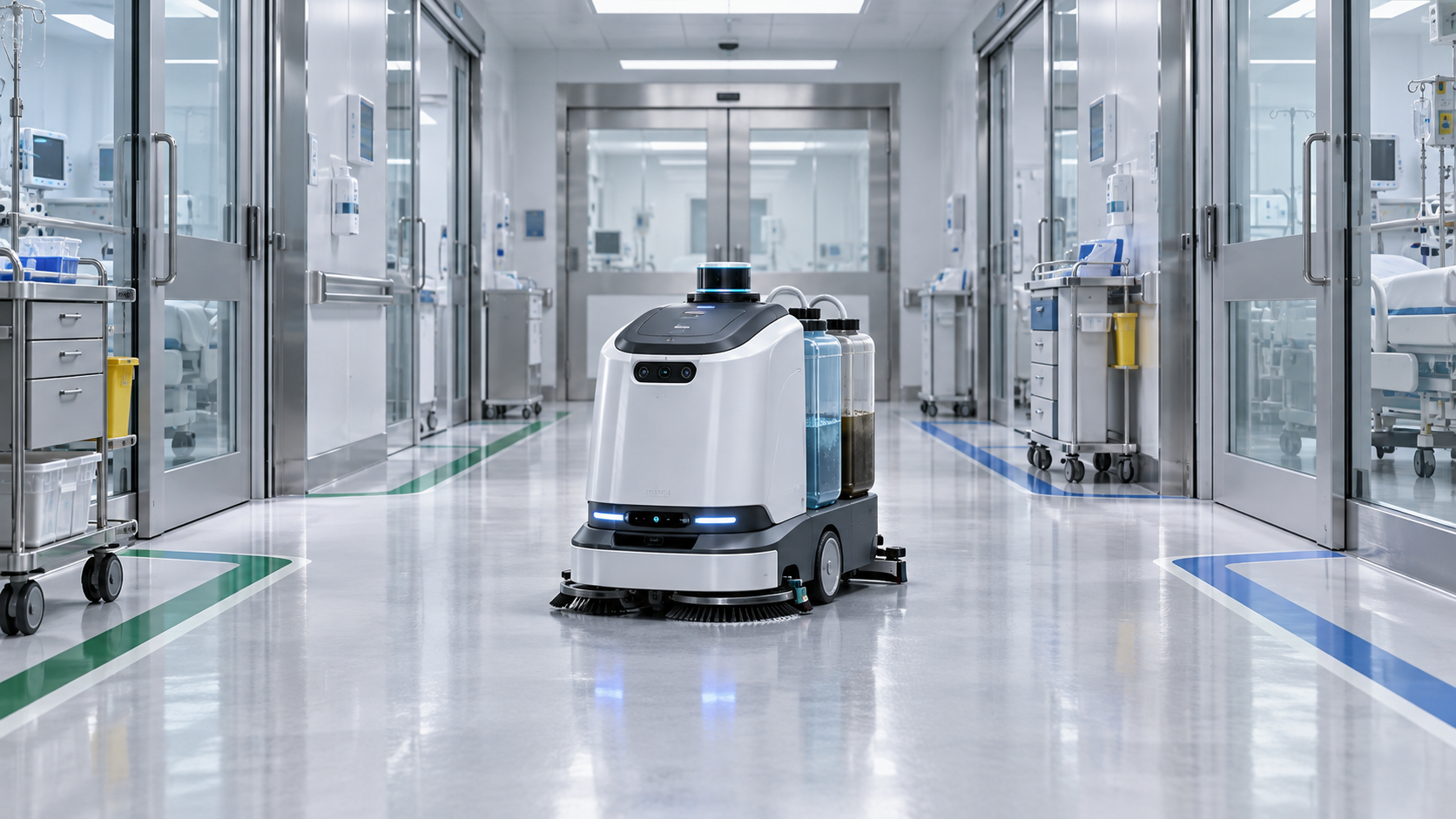
For technical evaluators, navigation reliability is one of the clearest indicators of whether an autonomous scrubber or robotic floor cleaner is ready for real commercial deployment. In theory, many machines can follow a planned route. In practice, cleaning environments are rarely static. Chairs move, people cross aisles, carts appear without warning, reflective glass disrupts sensors, and floor layouts change during operating hours. This is where SLAM becomes more than a software feature. It becomes the basis for whether the machine can clean predictably, safely, and efficiently.
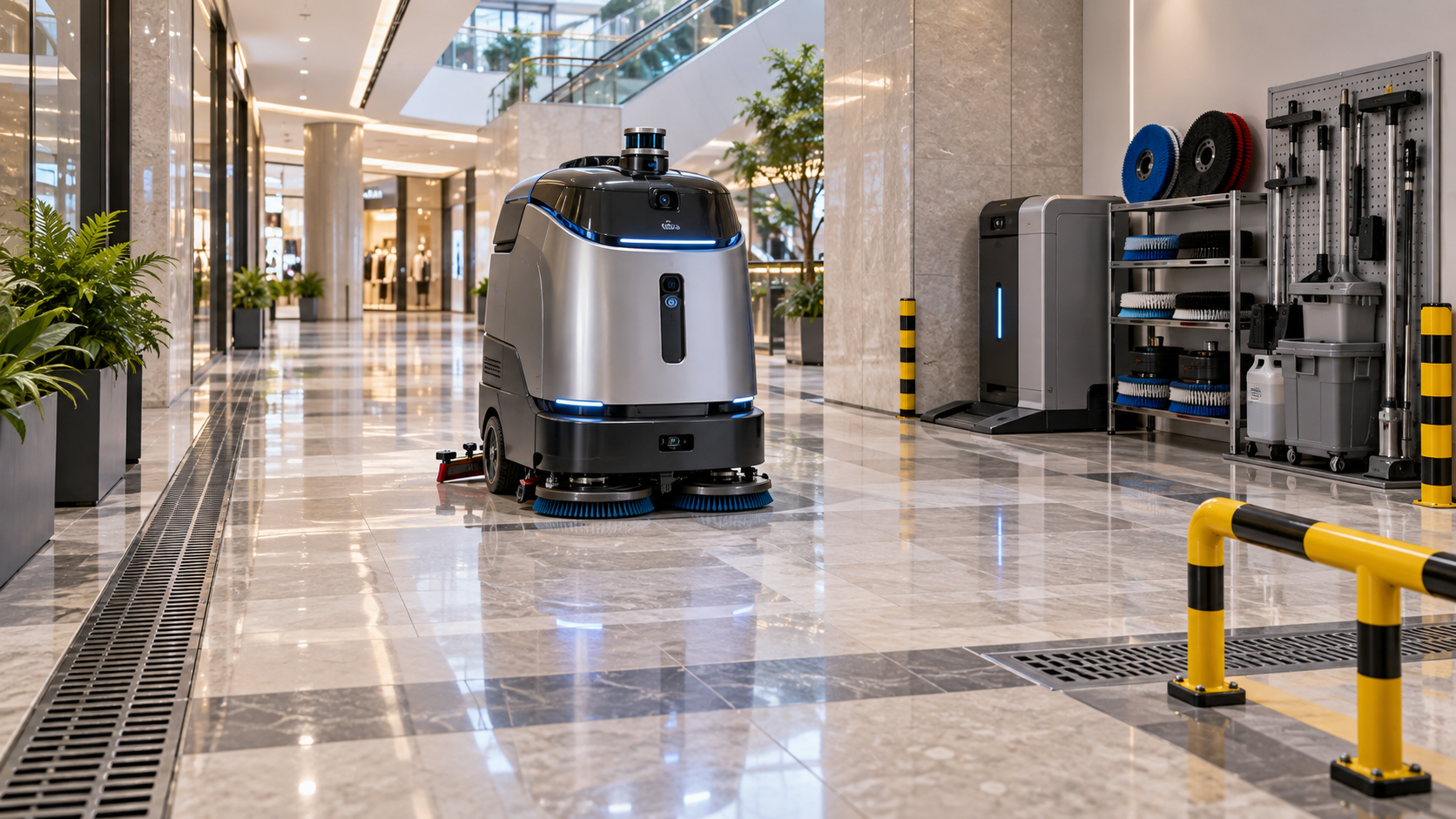
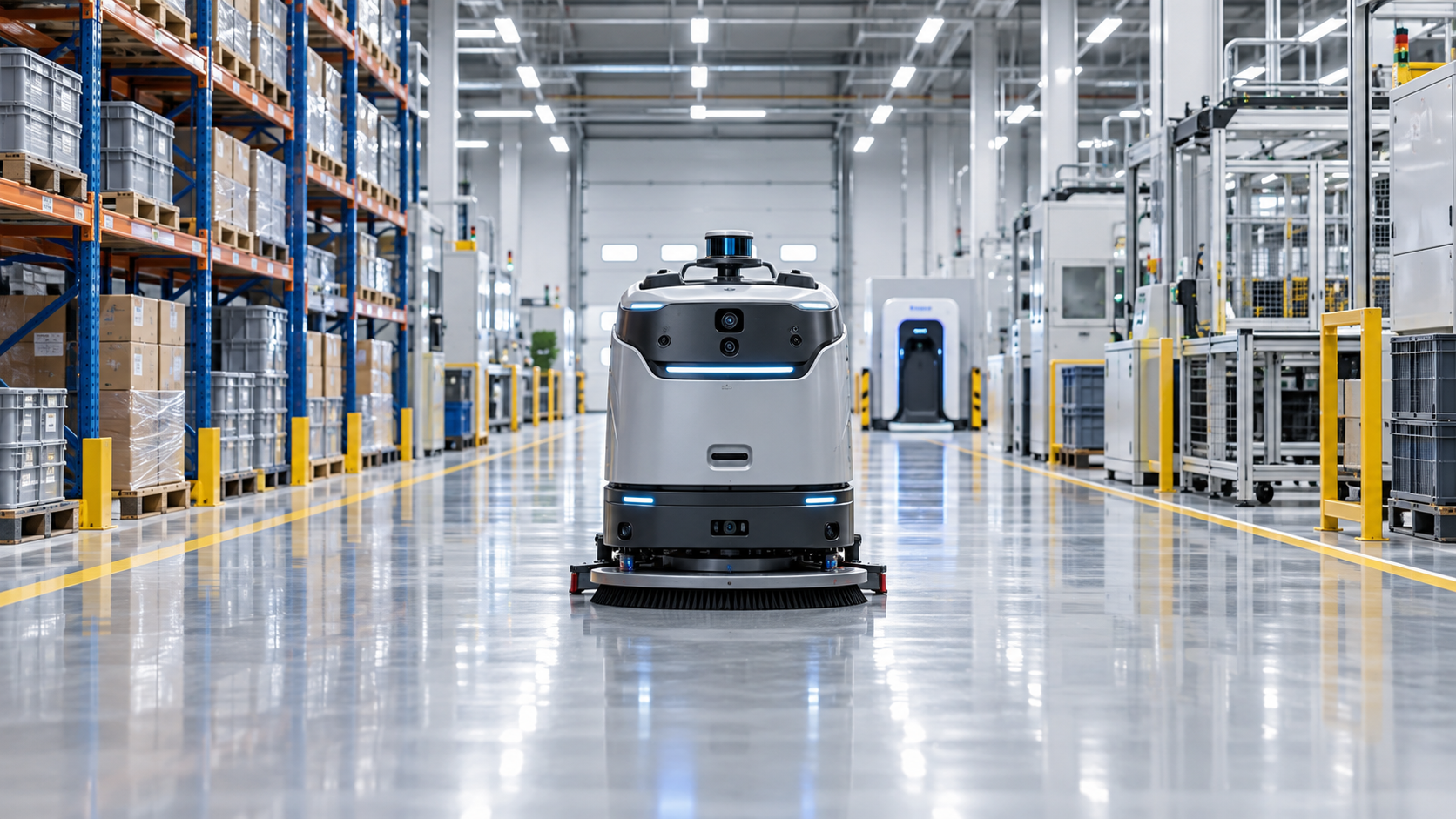
In autonomous cleaning machines, SLAM—simultaneous localization and mapping—improves navigation accuracy by allowing the robot to build a map of its environment while continuously estimating its own position inside that map. That sounds straightforward, but the operational impact is significant: fewer missed areas, fewer duplicate passes, better edge coverage, more stable docking, and more reliable operation in spaces that are not identical from one shift to the next.
The important point for evaluators is that “SLAM-equipped” does not automatically mean accurate navigation. Accuracy depends on the quality of sensing, the robustness of localization, the update speed of mapping, the route-planning logic, and the machine’s ability to handle dynamic interference. A robot that maps well but localizes poorly will still drift. A robot that localizes well in an empty corridor may still fail in crowded retail or healthcare settings.
Why navigation accuracy matters more in cleaning than in many other service robots
Commercial cleaning robots are often judged by headline metrics such as battery runtime, cleaning width, tank capacity, or labor savings. Yet navigation accuracy has a direct effect on all of those outputs. If the machine repeatedly overlaps paths, runtime is wasted. If it leaves untreated strips near fixtures or walls, cleaning quality declines. If it loses position and aborts tasks, labor dependency returns because staff must intervene.
Cleaning robots also operate unusually close to the floor and in environments where the floor itself is the work surface. Small positioning errors therefore matter. A route deviation of a few centimeters may be acceptable for a delivery robot moving down a wide corridor, but it can be operationally visible for a floor scrubber expected to produce uniform coverage. Accuracy in this segment is not only about reaching a destination. It is about maintaining lane consistency, coverage completeness, obstacle handling, and repeatability over an entire cleaning cycle.
What SLAM actually contributes to navigation precision
At a technical level, SLAM solves two linked problems at the same time. The first is mapping: identifying walls, aisles, corners, openings, and obstacles to create a usable representation of the environment. The second is localization: estimating where the machine is within that representation in real time.
Without this closed-loop process, navigation depends too heavily on dead reckoning, fixed markers, magnetic strips, or pre-defined infrastructure. Those approaches can work in controlled spaces, but they are less resilient when layouts change or when operators expect flexible deployment across multiple facilities.
SLAM improves navigation accuracy in autonomous cleaning machines in several practical ways:
- Position correction over time: The machine continuously compares sensor inputs with its map, reducing cumulative drift.
- Adaptation to partial environmental change: If temporary obstacles appear, the robot can reroute without losing its global position.
- More precise return-to-path behavior: After avoidance maneuvers, the machine can resume the intended coverage path more accurately.
- Better repeatability across shifts: Stored maps support consistent operation even when ambient conditions vary.
- Scalable deployment: Facilities can be remapped or updated without installing additional navigation infrastructure.
For evaluators, the value is not only in autonomy, but in predictable autonomy. Reliable localization is what turns route planning into dependable cleaning execution.
Sensor fusion is usually the real reason one SLAM system outperforms another
When vendors describe SLAM performance, attention often goes to a single sensor, most commonly LiDAR. LiDAR is important, but it is only one part of a navigation stack. In most serious commercial machines, accuracy depends on sensor fusion: the combination of LiDAR, cameras, wheel encoders, IMU data, ultrasonic sensors, bumper feedback, and sometimes depth sensing.
LiDAR-based SLAM is generally favored in commercial cleaning because it can provide stable geometric information for indoor mapping and is less dependent on ambient lighting than vision-only systems. It performs well in corridors, open lobbies, and structured floor plans. But LiDAR also has limits. Low-profile obstacles, highly reflective surfaces, transparent glass, and cluttered dynamic environments can reduce confidence if no other sensing layer is available.
Vision-based SLAM can add contextual detail and improve feature recognition, especially in environments where geometric landmarks are limited. Yet vision performance is sensitive to lighting changes, shadows, glare, and repetitive textures. Wheel odometry helps estimate motion, but cannot maintain long-term accuracy alone because slip, wet surfaces, and uneven traction introduce drift. IMU data helps stabilize short-term motion estimation, but also accumulates error if not corrected by external references.
The strongest systems therefore fuse multiple data sources and weigh them dynamically. For technical assessment, this matters more than any isolated sensor specification. A machine with modest LiDAR resolution but robust fusion and strong recovery logic may outperform a machine with better nominal sensor hardware but weaker localization software.
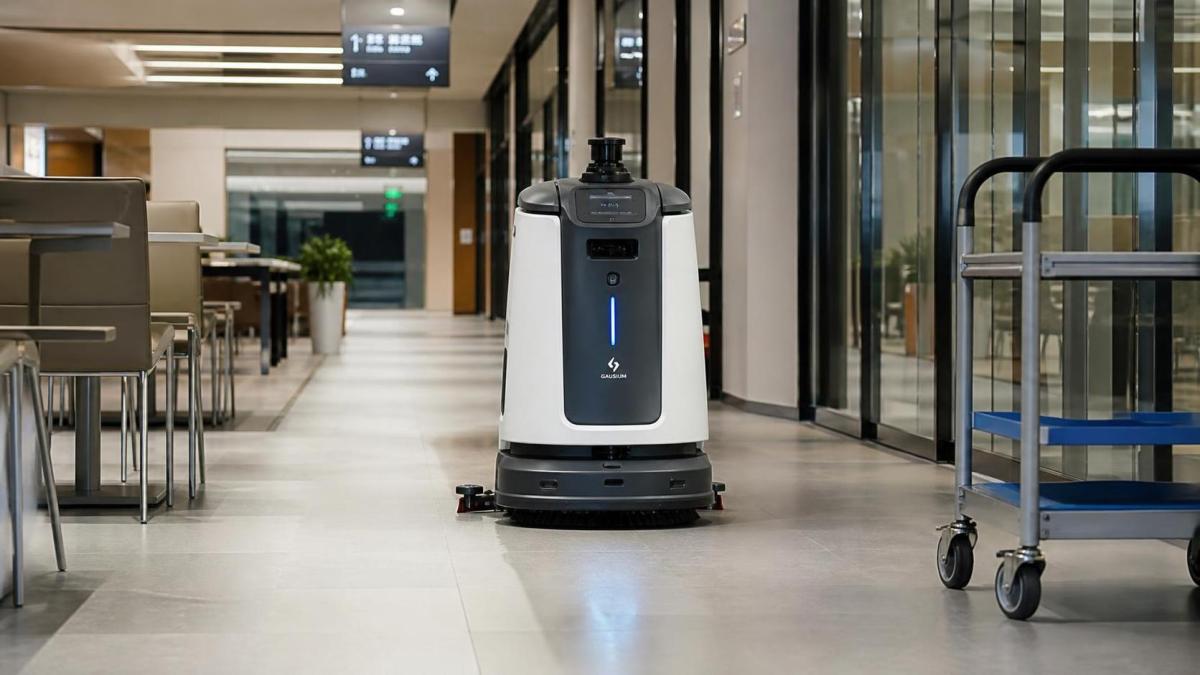
How SLAM reduces missed areas and unnecessary repeat passes
Coverage quality is where navigation accuracy becomes measurable in business terms. In cleaning applications, poor localization typically appears in three ways: gaps, overlap, and inconsistency near boundaries.
Gaps occur when the machine slightly underestimates lateral offset between adjacent lanes or loses position near obstacles and resumes on the wrong line. Overlap occurs when uncertainty in localization causes the robot to repeat cleaned zones to remain “safe.” Inconsistency near edges happens when mapping resolution or obstacle classification is too coarse to support stable path planning around furniture, shelving, pillars, or wall protrusions.
SLAM helps reduce these problems by maintaining a continuously corrected pose estimate. That allows the cleaning machine to preserve lane spacing more accurately and to execute planned turns with less accumulated positional error. It also improves segmented area cleaning. Instead of treating each detour as a disruption that breaks route continuity, the robot can maintain awareness of what has already been cleaned and what remains pending.
This is especially valuable in large-format sites such as airports, hospitals, shopping centers, factories, and convention venues. In those environments, even small percentage losses in path efficiency can become meaningful in water consumption, energy use, labor supervision, and shift completion time.
Dynamic environments are the real stress test
Many autonomous cleaning machines look effective during controlled demonstrations. Technical evaluators usually need to know something else: how the navigation stack behaves after deployment in live traffic conditions.
A commercial environment is dynamic in several ways. There are moving people, rolling carts, changing furniture layouts, temporary barriers, wet-floor signs, open or closed doors, and intermittent cleaning staff intervention. Good SLAM does not simply detect obstacles. It distinguishes between stable map features and temporary objects, so the robot does not corrupt its base map every time the environment becomes crowded.
This distinction is critical. If temporary obstacles are mistakenly integrated as permanent structure, the machine’s future path planning deteriorates. If the localization engine becomes too conservative in dynamic scenes, the machine may stop too often or reroute inefficiently. If it is too aggressive, safety and cleaning quality both suffer.
For this reason, technical evaluation should focus on map persistence, obstacle classification behavior, and recovery performance after interruption. A robot that pauses for human traffic is normal. A robot that repeatedly loses global localization after such pauses is not operationally mature.
Accuracy is not only a software issue; the mechanical platform also matters
One common misunderstanding in the market is to treat SLAM as if it can fully compensate for platform limitations. It cannot. Navigation accuracy depends partly on software, but also on the physical stability of the machine.
Wheel slip on wet tile, inconsistent traction on epoxy floors, caster vibration, poor encoder calibration, excessive chassis flex, and imprecise motor control all degrade localization quality. Even excellent SLAM algorithms will struggle if odometry input is noisy or if the machine’s motion response is not repeatable. In floor scrubbing applications, water flow and squeegee drag can also slightly affect motion behavior, especially during tight turns or low-speed alignment maneuvers.
That is why field validation should not stop at map creation or route simulation. Evaluators should test navigation during active cleaning, with water dispensing and recovery systems engaged, on the actual floor materials found in the target site.
Where navigation accuracy usually breaks down
Across commercial deployments, several failure points appear repeatedly:
- Reflective and transparent surfaces: glass partitions, polished metal, mirrored walls.
- Feature-poor open spaces: large empty halls where localization references are sparse.
- Highly repetitive layouts: long similar corridors or rack aisles that can confuse matching.
- Frequent layout reconfiguration: banquet halls, event spaces, retail displays.
- Wet or low-traction floors: increasing wheel-slip-related odometry error.
- Low obstacles: pallet forks, cable protectors, floor stands, hanging materials.
These conditions do not mean SLAM is unsuitable. They mean the navigation stack must be evaluated against the specific failure modes of the target environment. A hospital, warehouse, hotel lobby, and airport terminal may all require autonomous cleaning, but they stress the system differently.
How to evaluate SLAM performance beyond vendor claims
For technical teams, the most useful question is not whether a machine uses SLAM, but how its navigation accuracy is validated. Several assessment dimensions are more informative than generic feature lists:
- Localization stability: Does the robot maintain position after long runs, detours, and pauses?
- Coverage efficiency: What is the actual overlap rate and missed-area rate in realistic conditions?
- Map update behavior: How are environmental changes handled without degrading the core map?
- Recovery logic: Can the machine re-localize automatically after manual movement or obstruction?
- Docking precision: Does it consistently return for charging or refill without operator correction?
- Multi-site adaptability: How easily can maps be created, edited, versioned, and managed across facilities?
It is also worth requesting test conditions behind any published performance claim. Accuracy measured in an empty demo zone tells less than accuracy measured during business hours. Where standards or universally accepted benchmarks are concerned, buyers should be careful. Broad global standardization for SLAM accuracy reporting in commercial cleaning equipment remains limited at the application level, so many supplier metrics are not directly comparable. If a vendor cites a formal navigation accuracy standard, that reference should be checked carefully as application scope may differ or be indirect. Specific claims should be treated as 【待核实】 unless documented clearly.
Why SLAM quality affects total operating economics
Although SLAM is discussed as a navigation technology, its downstream effect is economic. Better navigation accuracy usually improves productive coverage per hour, reduces supervision time, lowers the number of manual touch-ups, and makes cleaning schedules more predictable. It also improves data credibility when facilities rely on route logs, heat maps, or completion reports for contract management and compliance documentation.
In outsourced facility management, this becomes especially relevant. If an autonomous machine claims area coverage but repeatedly misses perimeter sections or congested zones, the labor-saving model weakens because human follow-up remains necessary. In healthcare and transport environments, inconsistent route completion can also affect hygiene assurance and audit confidence, even when the machine appears operational.
What technical evaluators should prioritize next
The discussion around autonomous cleaning machines SLAM is moving beyond basic autonomy. The market now expects robust operation in mixed, changing, and high-traffic environments. For evaluation teams, the most practical shift is to treat navigation as a system capability rather than a checkbox feature.
That means examining the full chain: sensing, fusion, localization, mapping, route execution, mechanical stability, and exception handling. It also means validating performance on the target floor type, in the real traffic pattern, and during actual cleaning rather than in dry-run navigation mode.
SLAM improves navigation accuracy because it gives autonomous cleaning machines a continuously updated understanding of where they are and how the environment around them is changing. But the procurement and deployment implication is more specific than that. The best systems are the ones that preserve cleaning quality when conditions are imperfect. In commercial operations, that is the difference between a machine that is technically autonomous and one that is operationally dependable.
Get weekly intelligence in your inbox.
No noise. No sponsored content. Pure intelligence.
 Oct 02, 2026How Electric Street Sweepers Support Sustainable Municipal Cleaning ProgramsHow Electric Street Sweepers Support Sustainable Municipal Cleaning Programs
 Oct 01, 2026How Resorts Can Size Laundry Systems for Peak Occupancy and Linen TurnoverHow Resorts Can Size Laundry Systems for Peak Occupancy and Linen Turnover
 Sep 30, 2026How to Select Cavitation Cleaning Equipment for Precision Parts and Complex GeometriesHow to Select Cavitation Cleaning Equipment for Precision Parts and Complex Geometries
 Sep 29, 2026Selecting Ultra-High-Pressure Jetting Equipment for Concrete Hydro-DemolitionSelecting Ultra-High-Pressure Jetting Equipment for Concrete Hydro-Demolition
 Sep 29, 2026Street Sweeper Models Compared by Road Type, Debris Load, and Shift LengthStreet Sweeper Models Compared by Road Type, Debris Load, and Shift Length
 Sep 29, 2026What Should Cities Verify Before Choosing a Municipal Sanitation Vehicle OEM?What Should Cities Verify Before Choosing a Municipal Sanitation Vehicle OEM?
 Sep 29, 2026How to Evaluate a Municipal Sanitation Vehicle Supplier for Fleet TendersHow to Evaluate a Municipal Sanitation Vehicle Supplier for Fleet Tenders
 Sep 29, 2026Why Residual Soil Persists in Kegs After CIP Cleaning CyclesWhy Residual Soil Persists in Kegs After CIP Cleaning Cycles
 Sep 28, 2026How Hospitals Can Select Automated Hygiene Systems for High-Risk Care AreasHow Hospitals Can Select Automated Hygiene Systems for High-Risk Care Areas
 Sep 27, 2026How to Size a Single-Tank Ultrasonic Cleaner for Parts, Load Weight, and ThroughputHow to Size a Single-Tank Ultrasonic Cleaner for Parts, Load Weight, and Throughput
 Sep 26, 2026How to Size Cleaning Pumps for Shipyard Bilge, Hull, and Dock Washdown DutiesHow to Size Cleaning Pumps for Shipyard Bilge, Hull, and Dock Washdown Duties
 Sep 25, 2026How Facility Buyers Can Evaluate Commercial Cleaning Industry SuppliersHow Facility Buyers Can Evaluate Commercial Cleaning Industry Suppliers
 Sep 24, 2026How to Select Medical Instrument Cleaning Equipment for Complex Surgical DevicesHow to Select Medical Instrument Cleaning Equipment for Complex Surgical Devices
 Sep 23, 2026How to Evaluate a Municipal Sanitation Equipment Factory for Fleet ReliabilityHow to Evaluate a Municipal Sanitation Equipment Factory for Fleet Reliability
 Sep 22, 2026Selecting 500 Bar Waterjet Pump Systems for Concrete Hydro-Demolition ProjectsSelecting 500 Bar Waterjet Pump Systems for Concrete Hydro-Demolition Projects
 Sep 21, 2026Warehouse Route Optimization: Reducing Travel Time in High-Volume PickingWarehouse Route Optimization: Reducing Travel Time in High-Volume Picking
 Sep 20, 2026Selecting High-Capacity Industrial Washer-Extractors for Multi-Shift Laundry OperationsSelecting High-Capacity Industrial Washer-Extractors for Multi-Shift Laundry Operations
 Sep 19, 2026How to Size a Hotel Laundry System for Peak Occupancy and Linen TurnoverHow to Size a Hotel Laundry System for Peak Occupancy and Linen Turnover
 Sep 18, 2026How Fluid Dynamics Efficiency Shapes Cavitation Performance in Ultrasonic CleaningHow Fluid Dynamics Efficiency Shapes Cavitation Performance in Ultrasonic Cleaning
 Sep 18, 2026Municipal Equipment Trends: Why Cities Are Moving Toward Electric Street SweepersMunicipal Equipment Trends: Why Cities Are Moving Toward Electric Street Sweepers
 Sep 18, 2026Factory Cleaning Automation: When Autonomous Scrubbers Deliver Measurable ROIFactory Cleaning Automation: When Autonomous Scrubbers Deliver Measurable ROI
 Sep 18, 2026Industrial Cleaning System Design: Matching Water, Pressure, and Waste StreamsIndustrial Cleaning System Design: Matching Water, Pressure, and Waste Streams
 Sep 18, 2026What to Audit Before Partnering With an Industrial Cleaning System FactoryWhat to Audit Before Partnering With an Industrial Cleaning System Factory
 Sep 18, 2026Choosing an Industrial Hygiene Equipment Supplier: Service, Parts, and ComplianceChoosing an Industrial Hygiene Equipment Supplier: Service, Parts, and Compliance
 Sep 18, 2026How to Evaluate Industrial Hygiene Machinery Manufacturers Beyond PriceHow to Evaluate Industrial Hygiene Machinery Manufacturers Beyond Price
 Sep 18, 2026Equipment Washing Stations: Key Design Features for Safer Shift ChangeoversEquipment Washing Stations: Key Design Features for Safer Shift Changeovers
 Sep 18, 2026Chemical-Free Disinfection Systems: Where Steam and UV Methods Work BestChemical-Free Disinfection Systems: Where Steam and UV Methods Work Best