Choosing a Robotic Navigation Technology Manufacturer: Key Evaluation Criteria
The best robotic navigation technology manufacturer is not necessarily the one with the most advanced sensor list. It is the supplier that can demonstrate reliable movement in your facility, integrate with the cleaning equipment you plan to use, document how safety responsibilities are handled, and support the system throughout its working life.
For procurement teams, the decision starts with a distinction: are you buying a complete autonomous floor scrubber, a navigation system for integration into your own machine, or a software platform that works with existing hardware? Each purchase carries different responsibilities for performance, support, and cost. Establish that scope before comparing quotations.
Start With the Operating Environment, Not the Technology Name
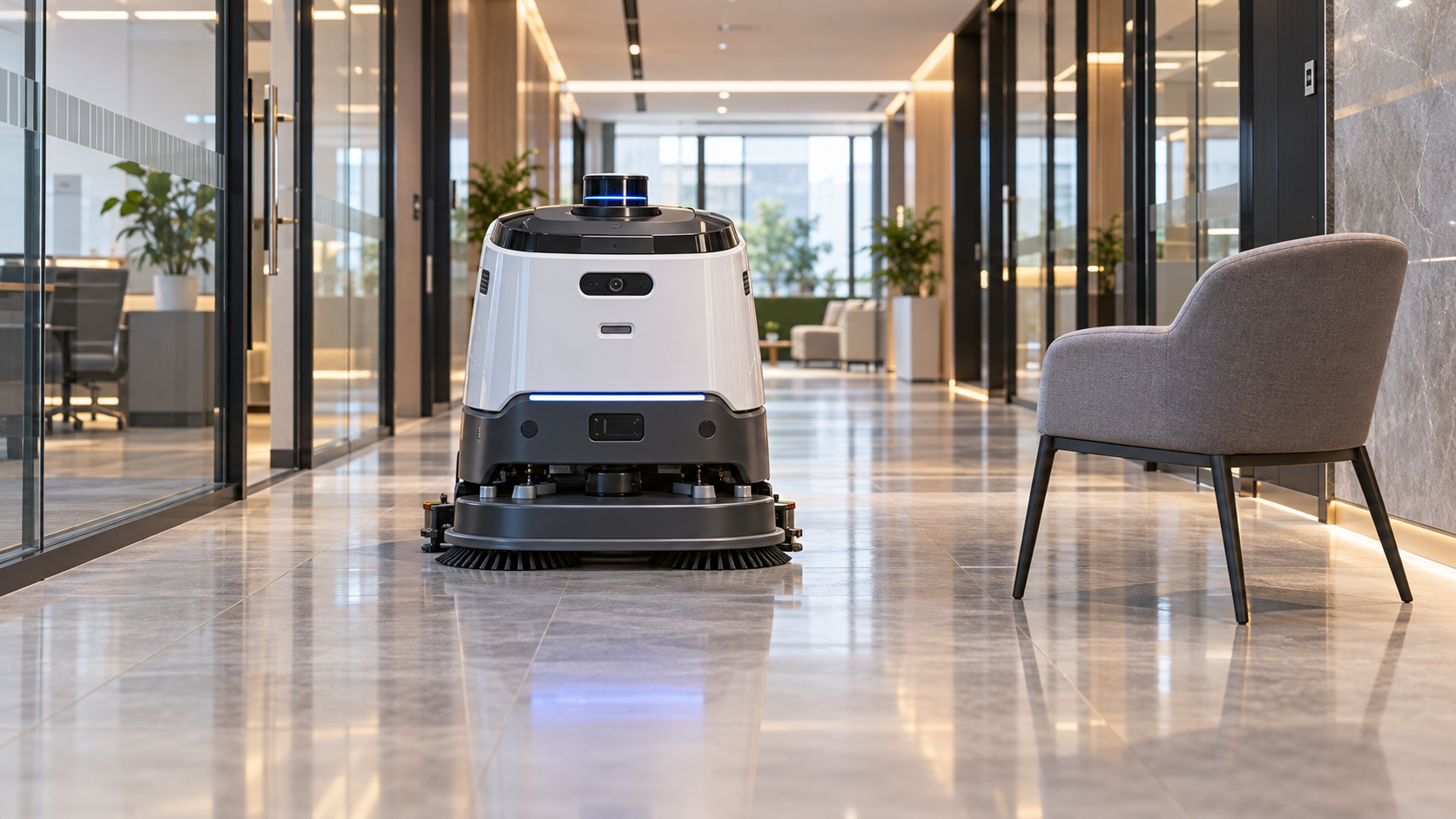
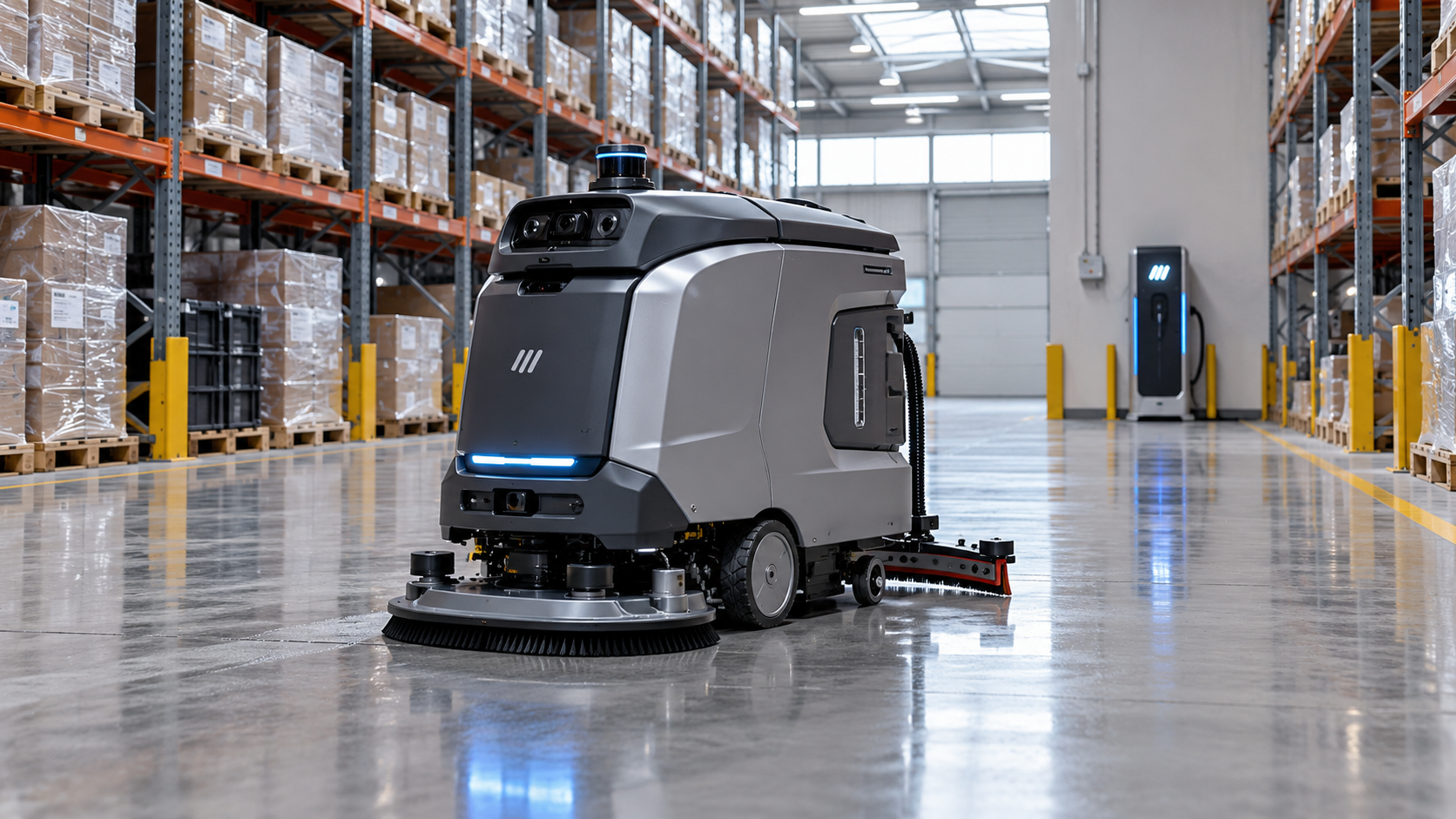
Navigation performance depends on where and when a robot works. A system that moves well through a quiet warehouse aisle may struggle in an airport concourse when passengers, luggage, and temporary barriers change the available space. A hospital corridor presents another set of conditions: people and carts can interrupt a route, while access to some areas may be restricted at certain times.
Describe the intended environment in the request for proposal. Include floor plans where available, typical aisle widths, doorways, ramps, floor transitions, and the location of charging or water-service points. Note whether the robot will operate alongside people and vehicles, and whether cleaning takes place during opening hours or overnight.
Also identify conditions that may affect sensing or movement: reflective surfaces, glass partitions, low obstacles, wet floors, changing furniture layouts, and areas with limited clearance. The point is not to eliminate every difficult condition in advance. It is to see how each supplier proposes to handle the conditions that matter to your operation.
Separate navigation success from cleaning success. A robot can follow a route without covering the floor adequately, reaching edges, applying the right cleaning settings, or completing its work before the area reopens. Ask suppliers to explain how route planning accounts for the cleaning width, turning space, and areas that still need manual attention.
Compare LiDAR, Cameras, and SLAM by Their Practical Limits
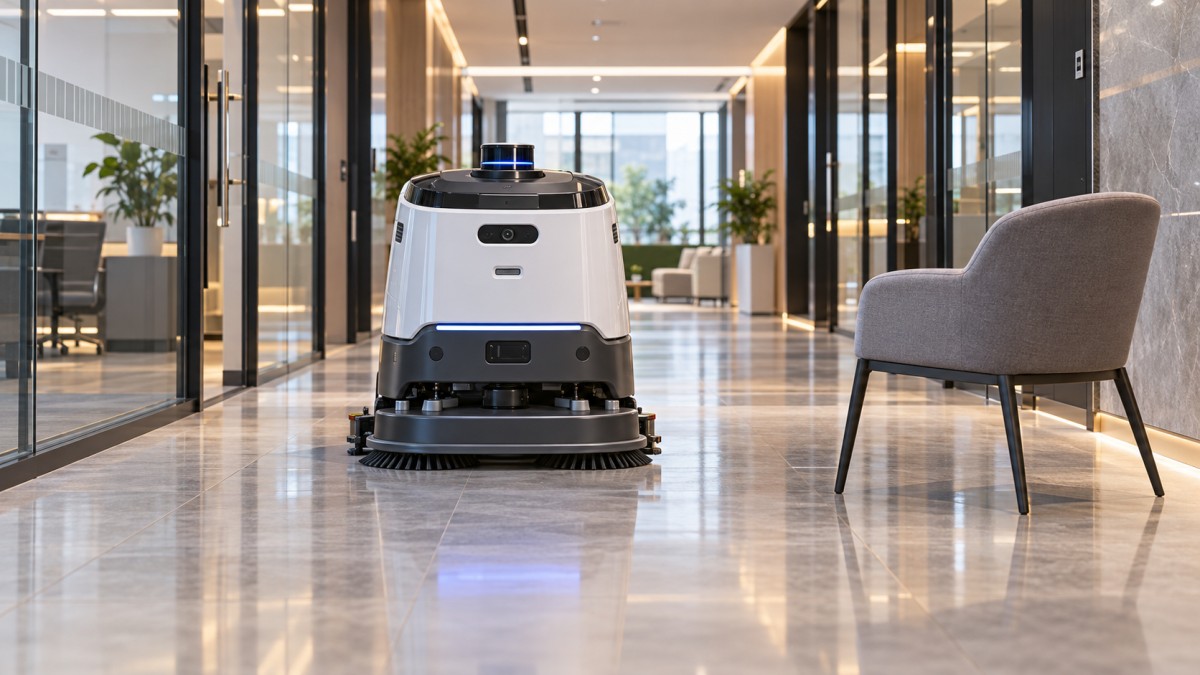
LiDAR, cameras, and other sensors give a robot information about its surroundings. SLAM, or simultaneous localization and mapping, helps it build or use a map while estimating its position. These terms describe parts of a system, not proof that the complete machine will perform well in a particular building.
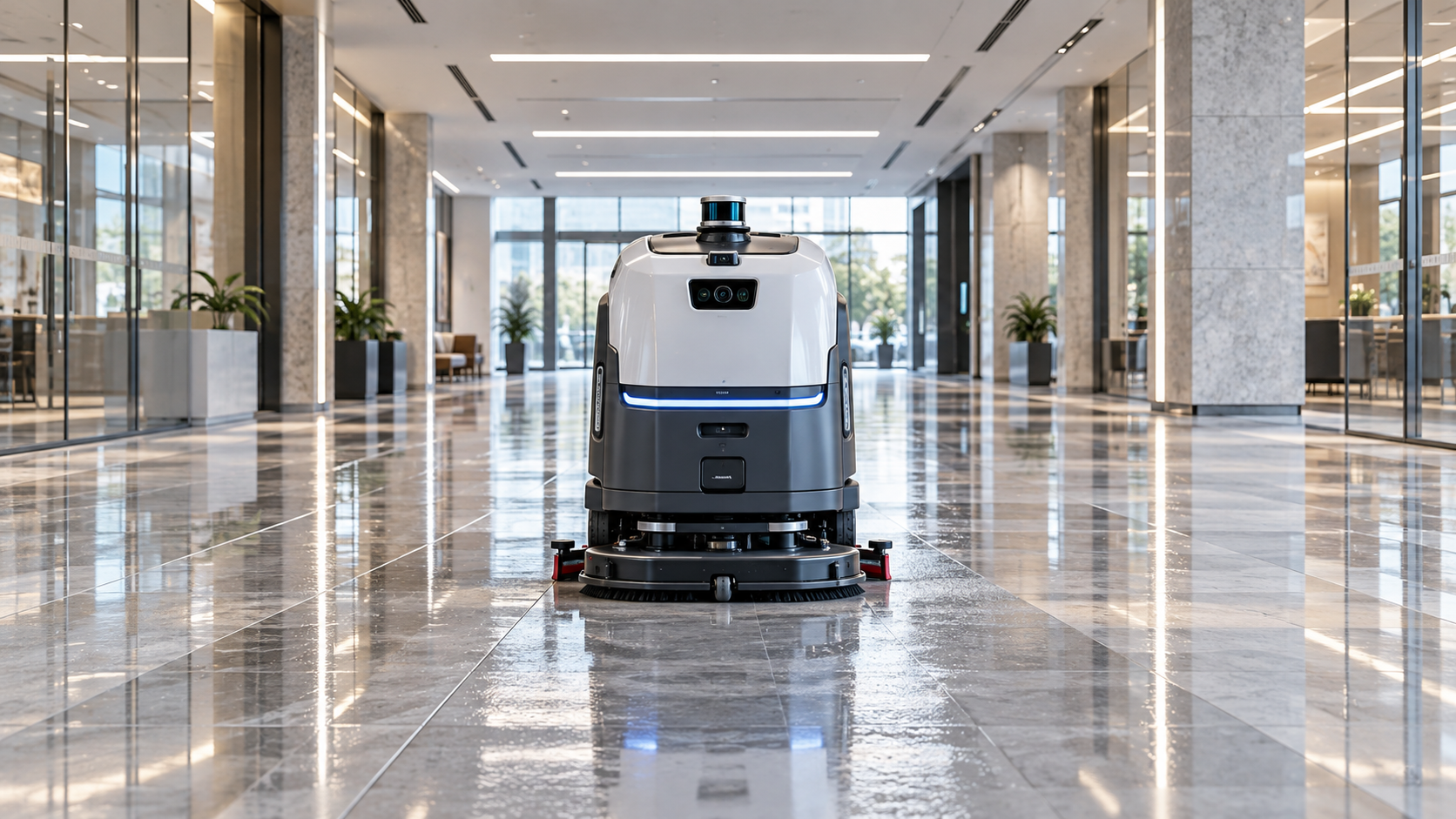
LiDAR-based navigation can help a robot perceive nearby geometry, but sensor placement, field of view, processing, and the characteristics of surrounding surfaces all affect what the machine detects. Camera-based systems can add visual information, although lighting, glare, and obstructions may affect what they can interpret. Some suppliers combine sensing methods; others use a more limited configuration that may still be suitable for a controlled site.
Ask each manufacturer to describe the complete sensing arrangement and its known operating boundaries. For a cleaning robot, that includes how it detects obstacles at different heights, responds to objects near the floor, and handles an obstructed or dirty sensor. A higher-specification sensor is not useful if the integrated machine cannot reliably respond to the conditions it detects.
Mapping deserves the same scrutiny. Find out who creates and edits maps, how the robot recovers after being moved, and what happens when shelving, partitions, or furniture change. A stable factory layout may need infrequent map updates. A flexible event venue may require staff to make changes regularly, making map-editing tools and support response times more consequential than a polished initial demonstration.
Make the Site Trial Part of the Buying Decision
A controlled demonstration is useful for understanding the interface, but it does not establish how a system performs during a normal shift. Before selecting a supplier, arrange a trial that reflects the intended route, traffic, floor condition, and operator availability. Use the same test conditions for competing solutions where practical.
Agree on the trial plan in advance. Define the area to be cleaned, the operating window, the expected level of human assistance, and how results will be recorded. Include difficult but representative situations, such as a temporarily blocked corridor or a chair moved into the route. Avoid creating unsafe situations solely to test the robot; the supplier should explain the safe method for evaluating its responses.
Useful measures include:
- Completed coverage: how much of the agreed cleaning area was actually reached, including the reason for any exclusions.
- Interventions: how often staff had to move an obstacle, restart a task, reposition the robot, or contact support.
- Recovery: whether the machine resumed appropriately after a blockage, interruption, or loss of position.
- Turnaround work: time spent preparing the area, filling and emptying tanks, charging, cleaning sensors, and reviewing the completed task.
- Consistency: whether results remain acceptable across different shifts or normal changes in the environment.
Record both the robot’s operating time and the staff time needed around it. A fast route may offer little operational benefit if it requires frequent rescue calls or extensive preparation. Conversely, a slower machine may be a better fit if it completes the required work with little supervision and leaves fewer areas for manual follow-up.
For sites with multiple zones, trial the most representative and most demanding areas, not just the easiest open floor. Agree on acceptance criteria before the trial begins, including what constitutes a successful run and which issues must be resolved before purchase.
Establish Who Is Responsible for Integration and Safety
When purchasing a complete robot, the equipment supplier may provide the navigation, machine controls, and service as one package. Even then, ask which components come from third parties and who owns the response when a navigation issue stops the machine.
When buying a navigation module for integration into a scrubber or another mobile platform, responsibilities are more complex. The integrator must consider the machine’s size, speed, braking behavior, sensor mounting, and cleaning attachments. A navigation system that works on one chassis does not automatically work on another.
Request an interface specification covering hardware connections, software dependencies, supported control functions, diagnostic information, and update compatibility. Ask who supplies integration engineering, how changes are tested, and what happens if an update to one component affects another. A clear division of responsibility is particularly important when the navigation vendor, equipment builder, and local service provider are different companies.
Safety documentation should describe the complete application, not only an individual sensor. Request the relevant risk assessment, operating instructions, emergency-stop arrangements, and procedures for foreseeable faults. Discuss restricted areas, pedestrian interaction, manual operation, and what the machine does when it cannot continue safely. Have the responsible engineering and safety teams assess the applicable requirements for the machine and the markets where it will operate.
Do not treat obstacle avoidance as a substitute for a documented safety approach. A supplier should be able to explain which functions support navigation, which are part of the safety design, and what site controls or operator actions remain necessary.
Check Software Ownership, Data Access, and Support
Navigation is not a one-time hardware purchase. Maps, software versions, user permissions, and service tools all influence whether the equipment remains usable as the facility changes.
Ask whether maps and operating data are stored locally, in the cloud, or through a combination of both. Determine what happens during a network outage: can the robot complete a scheduled task, can staff access essential functions, and will records synchronize later? For sensitive facilities, involve the IT and security teams early enough to review connectivity, access controls, remote support, and data retention.
Data access also affects future flexibility. Establish whether you can export maps, task records, and performance reports, and in what form. A map file may not be usable with a competing system even if it can be exported, so ask about practical portability rather than assuming it.
Review the support model as carefully as the technology:
- Who provides first-line support, and in which operating hours and languages?
- Which faults can be diagnosed remotely, and when is an on-site visit required?
- Are replacement sensors, controllers, and other critical parts available through a defined service channel?
- What software updates are included, and how are updates scheduled and tested?
- Can site staff make routine map and route changes without a paid service visit?
Put response targets, escalation paths, warranty exclusions, and spare-parts arrangements into the contract. For a multi-site deployment, check whether the same support model applies at every location. A supplier may have strong technical capability but limited local service coverage, which changes the practical risk of downtime.
Calculate Total Cost Around the Work That Remains
The purchase price is only the starting point. Compare suppliers using a common period and the same assumptions about working hours, cleaning coverage, and staffing. Include costs that may sit outside the initial equipment quotation:
- Site surveys, mapping, installation, integration, and commissioning.
- Software subscriptions, connectivity, data storage, and recurring license fees.
- Operator training, refresher training, and route or map maintenance.
- Preventive maintenance, replacement parts, consumables, and service visits.
- Manual cleaning of inaccessible areas and staff time for supervision or recovery.
- Battery replacement, equipment downtime, and end-of-life arrangements where applicable.
Compare these costs with the current cleaning process on the same scope of work. Include the labor that automation may release, but do not assume the role disappears: staff may still prepare the site, service the machine, handle exceptions, and clean areas it cannot reach. Water, detergent, and energy use may also change, but their effect depends on the cleaning system and operating settings, not navigation alone.
For planning purposes, a simple payback estimate divides the upfront investment by the expected annual net savings. Calculate those savings after recurring fees and remaining labor are included. Then test a less favorable scenario with lower utilization, more interventions, or additional service costs. If the purchase only works financially under uninterrupted operation, the business case is fragile.
Use the Contract to Turn Comparisons Into Commitments
A strong proposal should make it possible to distinguish a demonstrated capability from a planned one. List the required functions, supported operating conditions, deliverables, and dependencies. Tie acceptance to the agreed site trial or commissioning test, including how defects will be recorded, corrected, and retested.
Clarify what happens when the facility changes after deployment. The contract should identify whether remapping, integration changes, additional training, and software upgrades are included or charged separately. For subscription-based systems, review renewal terms, access after cancellation, and the process for retrieving operational records.
Before issuing a purchase order, bring operations, maintenance, IT, safety, and procurement together around the same evidence: the site trial, integration scope, support commitments, and cost model. The preferred manufacturer should be the one whose system can perform the required work under those conditions and whose responsibilities remain clear after installation.
Get weekly intelligence in your inbox.
No noise. No sponsored content. Pure intelligence.
 Oct 30, 2026Choosing a Robotic Navigation Technology Manufacturer: Key Evaluation CriteriaChoosing a Robotic Navigation Technology Manufacturer: Key Evaluation Criteria
 Oct 30, 2026US Commercial Cleaning Robot Market Forecast to Reach $3.38 Billion by 2033US Commercial Cleaning Robot Market Forecast to Reach $3.38 Billion by 2033
 Oct 29, 2026Street Sweeper Prices: How Size, Powertrain, and Options Affect CostStreet Sweeper Prices: How Size, Powertrain, and Options Affect Cost
 Oct 28, 2026Ship Hull Cleaning Machines: Selecting Pressure and Flow for Dry-Dock UseShip Hull Cleaning Machines: Selecting Pressure and Flow for Dry-Dock Use
 Oct 27, 2026Choosing Waterjets for Coating Removal on Steel: Pressure, Flow, and NozzlesChoosing Waterjets for Coating Removal on Steel: Pressure, Flow, and Nozzles
 Oct 27, 2026Dreame Says Global Shipments of Ultra-Slim Floor Washers Surpass 1 MillionDreame Says Global Shipments of Ultra-Slim Floor Washers Surpass 1 Million
 Oct 26, 2026Industrial Ultrasonic Cleaners in India: Comparing Quotes and After-Sales SupportIndustrial Ultrasonic Cleaners in India: Comparing Quotes and After-Sales Support
 Oct 26, 2026Bay Village Council Approves CUES Sewer Inspection Vehicle and Bucher Street SweeperBay Village Council Approves CUES Sewer Inspection Vehicle and Bucher Street Sweeper
 Oct 25, 2026What Do Commercial Floor-Cleaning Robots Cost to Buy and Operate?What Do Commercial Floor-Cleaning Robots Cost to Buy and Operate?
 Oct 24, 2026Choosing Water-Saving Hospital Cleaning Equipment Without Compromising HygieneChoosing Water-Saving Hospital Cleaning Equipment Without Compromising Hygiene
 Oct 24, 2026Polytex Launches TCM-L Textile Management System at EXPOdetergoPolytex Launches TCM-L Textile Management System at EXPOdetergo
 Oct 23, 2026What Do Sustainable Cleaning Systems Cost to Buy, Operate, and Maintain?What Do Sustainable Cleaning Systems Cost to Buy, Operate, and Maintain?
 Oct 23, 2026Sedona Council Approves $331,404 Multihog ECV Electric Street Sweeper PurchaseSedona Council Approves $331,404 Multihog ECV Electric Street Sweeper Purchase
 Oct 22, 2026Warehouse Cleaning Equipment in Canada: Match Ride-On Scrubbers to Aisle WidthWarehouse Cleaning Equipment in Canada: Match Ride-On Scrubbers to Aisle Width
 Oct 22, 2026Primech and Sunnytech Sign MOU to Explore US Production of HYTRON Cleaning RobotsPrimech and Sunnytech Sign MOU to Explore US Production of HYTRON Cleaning Robots
 Oct 21, 2026Choosing a Commercial Laundry Equipment Supplier: Service, Parts, and WarrantyChoosing a Commercial Laundry Equipment Supplier: Service, Parts, and Warranty
 Oct 21, 2026Global Pressure Washer Market Projected to Reach $4.48 Billion by 2032Global Pressure Washer Market Projected to Reach $4.48 Billion by 2032
 Oct 20, 2026Shipyard Sanitation Systems: When to Choose Hot-Water Pressure WashersShipyard Sanitation Systems: When to Choose Hot-Water Pressure Washers
 Oct 20, 2026ACM Research’s China Revenue Rises 15.8% Amid Equipment LocalizationACM Research’s China Revenue Rises 15.8% Amid Equipment Localization
 Oct 19, 2026Laundry Heat Recovery Units: Estimating Payback for Commercial LaundriesLaundry Heat Recovery Units: Estimating Payback for Commercial Laundries
 Oct 18, 2026Compact Floor Sweeping Machines vs. Scrubber Dryers for Narrow Warehouse AislesCompact Floor Sweeping Machines vs. Scrubber Dryers for Narrow Warehouse Aisles
 Oct 16, 2026Choosing a Street Sweeper Supplier: Parts Availability and Service SupportChoosing a Street Sweeper Supplier: Parts Availability and Service Support
 Oct 15, 2026Wastewater Discharge Compliance Monitoring: Sampling and Reporting for PermitsWastewater Discharge Compliance Monitoring: Sampling and Reporting for Permits
 Oct 14, 2026Commercial Cleaning System Costs: Equipment, Labor, and Maintenance BudgetingCommercial Cleaning System Costs: Equipment, Labor, and Maintenance Budgeting
 Oct 13, 2026Water Recycling in Robotic Floor Scrubbers: Filtration and Reuse LimitsWater Recycling in Robotic Floor Scrubbers: Filtration and Reuse Limits
 Oct 12, 2026How to Select Obstacle Avoidance Sensors for Autonomous Floor ScrubbersHow to Select Obstacle Avoidance Sensors for Autonomous Floor Scrubbers
 Oct 11, 2026Ultrasonic Cleaner Lifecycle Analysis: Comparing Cost, Uptime, and Service LifeUltrasonic Cleaner Lifecycle Analysis: Comparing Cost, Uptime, and Service Life